Why Your Home Feels Off: The Psychology of Interior Design
Your home affects your mood more than you think. The science of neuroarchitecture explains why some rooms calm you down and others stress you out.
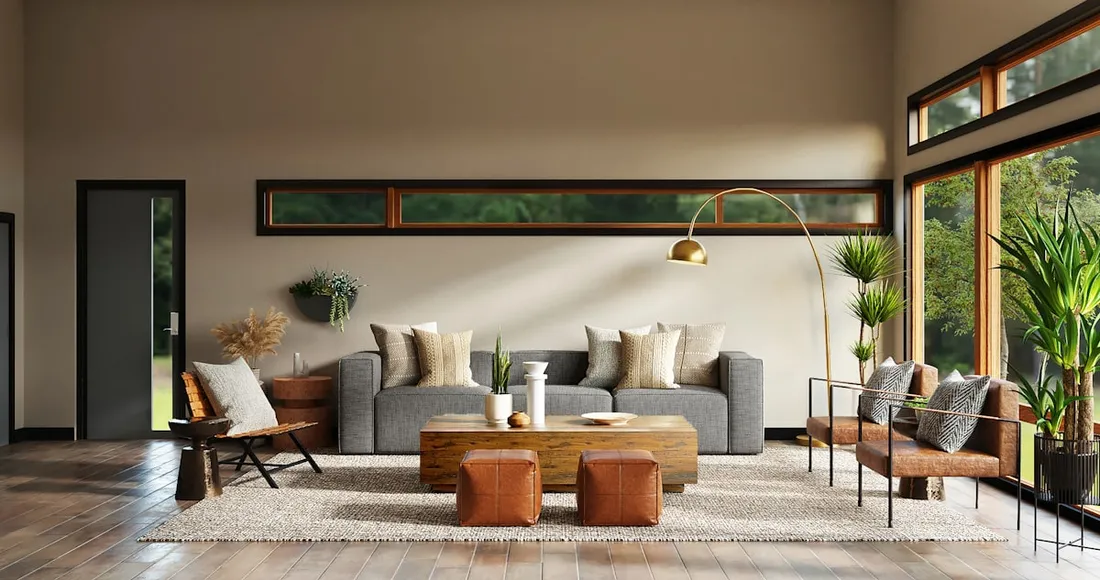
You know the feeling. You walk into a room and something is just off. You cannot point to what it is. The furniture is fine, the colors are fine, everything looks decent on paper. But it does not feel right. You do not want to be in there.
That feeling is not in your head. Or rather, it is — because your brain is constantly processing your physical environment whether you realize it or not. The field that studies this is called neuroarchitecture, and it explains why some spaces energize you while others drain you.
Your Brain Is Always Reading the Room
Every room you walk into triggers an automatic response. Your brain evaluates ceiling height, light levels, sightlines, color temperature, texture density, and spatial openness — all within seconds, all below conscious awareness.
High ceilings activate abstract thinking and creativity. Low ceilings promote focus and intimate conversation. Neither is better — but the mismatch matters. A home office with a soaring ceiling can make focused work harder. A living room with a low ceiling can feel oppressive when you want to relax.
The takeaway: You cannot change your ceiling height, but you can work with it. Low ceilings benefit from vertical elements — tall shelving, floor-to-ceiling curtains, vertical art — that draw the eye upward. High ceilings feel cozier when you bring elements downward — low-hanging pendants, art hung at eye level, furniture that is closer to the ground.
Why Clutter Creates Anxiety
This one is backed by serious research. A study from UCLA found that women who described their homes as cluttered or full of unfinished projects had higher cortisol levels throughout the entire day compared to women who described their homes as restful.
Visual clutter is cognitive overload. Every object in your field of vision is something your brain has to process and decide to ignore. When there are too many objects, your brain never finishes processing. You feel vaguely stressed without knowing why.
The fix is not minimalism. You do not need an empty room. You need surfaces that give your eye a place to rest. Clear your coffee table to two or three objects. Keep your desk to the essentials. Let your walls have blank space between frames. Your brain needs visual breathing room.
The Power of Natural Light
Exposure to natural light regulates your circadian rhythm, boosts serotonin, and improves sleep quality. Rooms with minimal natural light are literally depressing — seasonal affective disorder is the clinical version of what most of us feel mildly when we spend too much time in dark spaces.
Maximize every window you have. Remove heavy curtains and replace them with sheers. Pull furniture away from windows so light can travel deeper into the room. Clean your windows — dirty glass blocks more light than you think.
If natural light is limited, use full-spectrum bulbs in warm tones and keep lights on during the day. Your body needs the brightness cues even if the light is artificial.
Color Affects Your Nervous System
Color psychology is real, but it is simpler than most people make it.
Warm tones — cream, terracotta, soft yellow, warm grey — promote relaxation and comfort. They make a room feel inviting and safe.
Cool tones — blue, green, grey — promote focus and calm. They lower heart rate and are ideal for spaces where you need to think or sleep.
High contrast and bright saturated colors activate and energize. Great for a creative studio or a kids playroom. Exhausting for a bedroom.
The rule: Match the energy of the color to the purpose of the room. Calming colors for calming rooms. Energizing colors for energizing rooms. Most people go wrong by choosing colors they like in isolation without considering what the room needs to do.
Sightlines and Safety
Humans are wired to prefer spaces where we can see the entrance and have our backs protected. This is evolutionary — our ancestors needed to see threats coming. It is called the prospect-refuge theory and it still affects how comfortable you feel in a room.
Your sofa should face the door. Your desk should let you see who is approaching. Your bed should have a solid wall behind it, not a window. When these conditions are met, you feel subconsciously safe. When they are not, you feel uneasy.
If you cannot face the door, put a mirror where you can see the entrance reflected. It sounds minor but it genuinely changes how relaxed you feel in the space.
Material Textures and Wellbeing
Smooth, cold, hard surfaces — glass, polished metal, glossy laminate — read as sterile. Your brain does not register warmth from them.
Natural materials — wood, stone, wool, linen, ceramic — trigger a calming response. Studies show that rooms with visible wood grain lower heart rate and blood pressure. People consistently rate rooms with natural materials as more comfortable, even when the layout is identical to a room with synthetic materials.
You do not need to gut your home. Add a wooden tray to your coffee table. Swap synthetic cushion covers for linen. Put a wool throw on the sofa. Place a ceramic bowl on the counter. Each natural material you introduce shifts the room closer to a space your brain reads as calm.
The Room That Feels Right
When a room feels right, it is usually because all of these factors align. The light is warm and layered. The sightlines are clear. The surfaces have a mix of textures. There is breathing room between objects. The colors match the room’s purpose.
None of this requires expensive furniture or professional design. It requires paying attention to how a room makes you feel and adjusting the things that are within your control. Your home is the environment you spend the most time in. It is worth getting right.